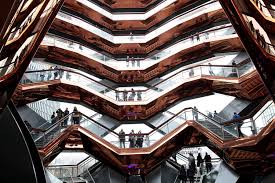
Most of our lives are spent indoors, The average person spends as much as 80–90% of his/her time indoors and space, lighting, colors, acoustics, aesthetics indeed play a big role on the psychology of the individual. This begs the question as to what actually shapes our personality. How much more of the design would be affected so that the person viewing it is having what he/she wants?. Thus we can say that individual differences exist so that proper architectural implementation will be necessary to meet that particular person’s psychological desires.
A person’s fondness towards a place depends on how he or she perceives it’s design elements, the illumination, materials, and furnishing or if the place is similar to any previous ambiance he or she is acquainted with. That is, if a person is not comfortable with the environment at someplace, he or she will not be at ease. So, it is of utmost importance to keep the psychological needs of a person regarding a vicinity in mind while designing a space. For example, a prison cannot have bright and vibrant colors simply because it’s not meant to be.
Another example would be the red road flats of Glasgow, built in 1971. They are considered to be the best high-rise estate in the city but these were soon left vacant as the residents found them difficult to warm up in the cold Scandinavia winters. Hence, An architect can control human behavior with his design by understanding the way that a building’s design can influence a person’s behavior, thus, modifying the individuals’ mood and perception. And it does not matter if the environment is natural or man-made. Understanding the way in which environment affects people could enable the design and construction of work, recreation and living space that has the ability to influence people’s behavior. Environment impacts the state of people’s mind and mood and the structure and layout of buildings has a profound impact on people. Building space has a specific impact on people’s life.
Hence, We can say that the architect would require a deep knowledge of human behavior- physical, psychological, and cultural. The way space is designed affects mood because it appeals to ( or offends ) the senses. Designed spaces must support the individual lifestyle and function of the person that resides within it. Building materials, lighting, ventilation and the use of space can all affect the mood and physical well-being of building occupants. Design can influence the productivity level of people working in an office. It can improve air quality at home and encourage movement while minimizing the risk of injuries.
 Steve's BLOG.